
[ TERRAHAWK FPV / DIGITAL KIT ]

Print, build, fly

The same blended wing we fly commercially. Scaled for your printer, your FPV gear, and your weekend.

  1. 01That's a great idea to create this beautiful model for FPV enthusiasts. I really can't wait for the STLs!@Minrot1, Instagram
  2. 02Can't wait to see the .stl. Thank you for all that you do, keep up the amazing work!@Ristoner1, Instagram
  3. 03I was starting to gather parts for a new build but I think I'm going to have to make this the next project. I'll be impatiently waiting...@thelonewrangler1008, Instagram
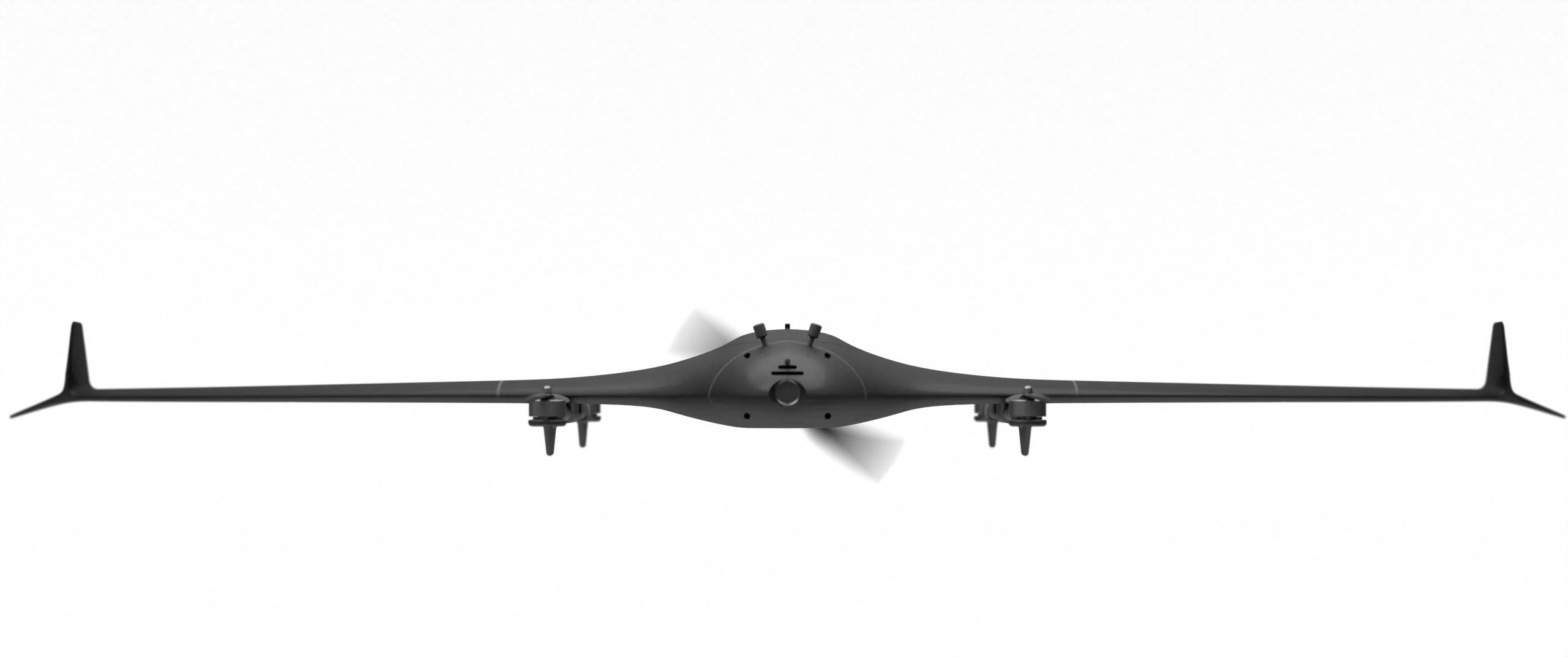
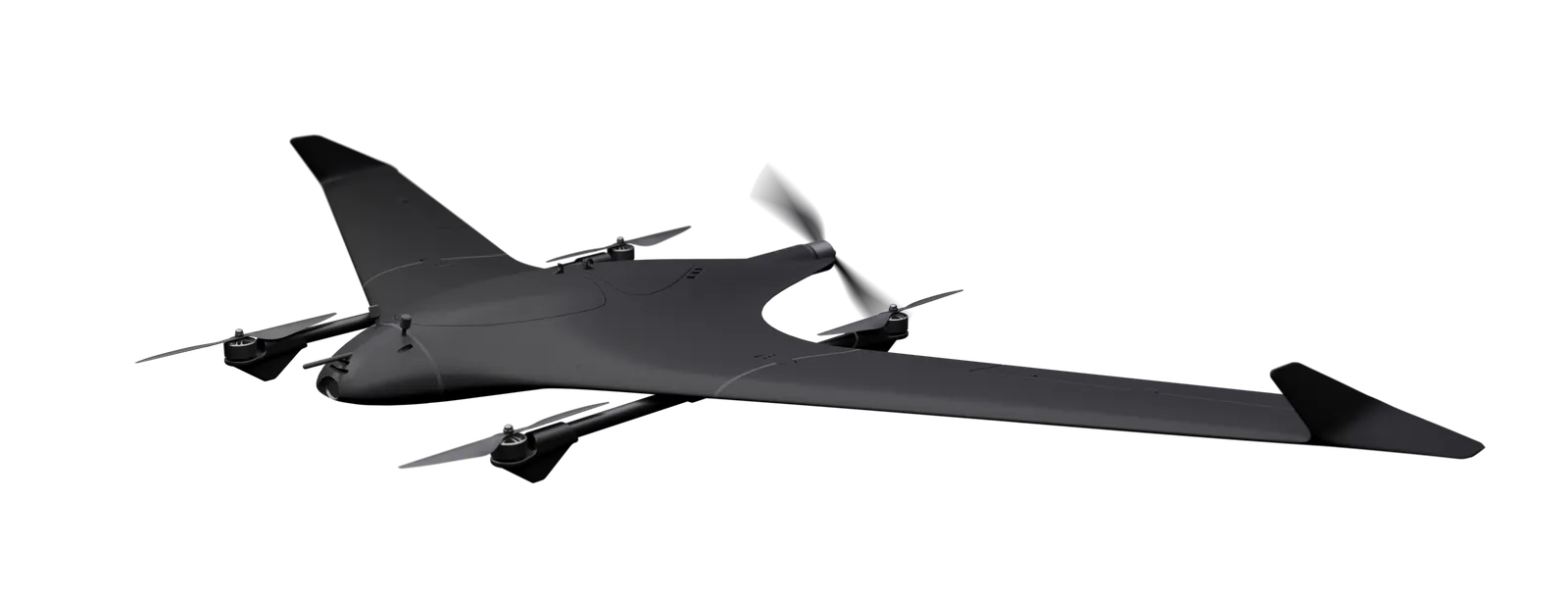
TerraHawk FPV seen head-on in the studio, a blended-wing aircraft with upswept wingtips, four lift rotors paired on two booms under the wing, and the pusher propeller turning behind the fuselage.

terrahawk fpv

Expand your horizon

Ready to build a blended-wing VTOL?

00/[TerraHawk Specs]Airframe · Design specification

1.4m

Wingspan

~2kg

Recommended build weight

4+1VTOL

Or pusher-only

6S2Pmax

Battery pack

* Airframe design specification, not flight-test results. Flight time and range publish when beta testing closes.

01

Fun to build.
Easy to fly.
Eager to break records

One airframe. Three aircraft, depending on what you print it in.

TerraHawk FPV is built to be somebody's first printed aircraft. It is engineered to still be worth flying when that same person is chasing records. It can be your first 3D printed aircraft and your only one.

What you print it in decides which of those you get. Same STL pack, same assembly, three very different machines at the end of it.

Pick your build

  • Learning the ropes: print in PLA Aero
  • Pushing endurance: print in ASA Aero
  • Reaching for speed: print in ABS-GF

Same airframe, different experiences. Nothing in the pack changes, so the second one you print can be a different aircraft entirely.

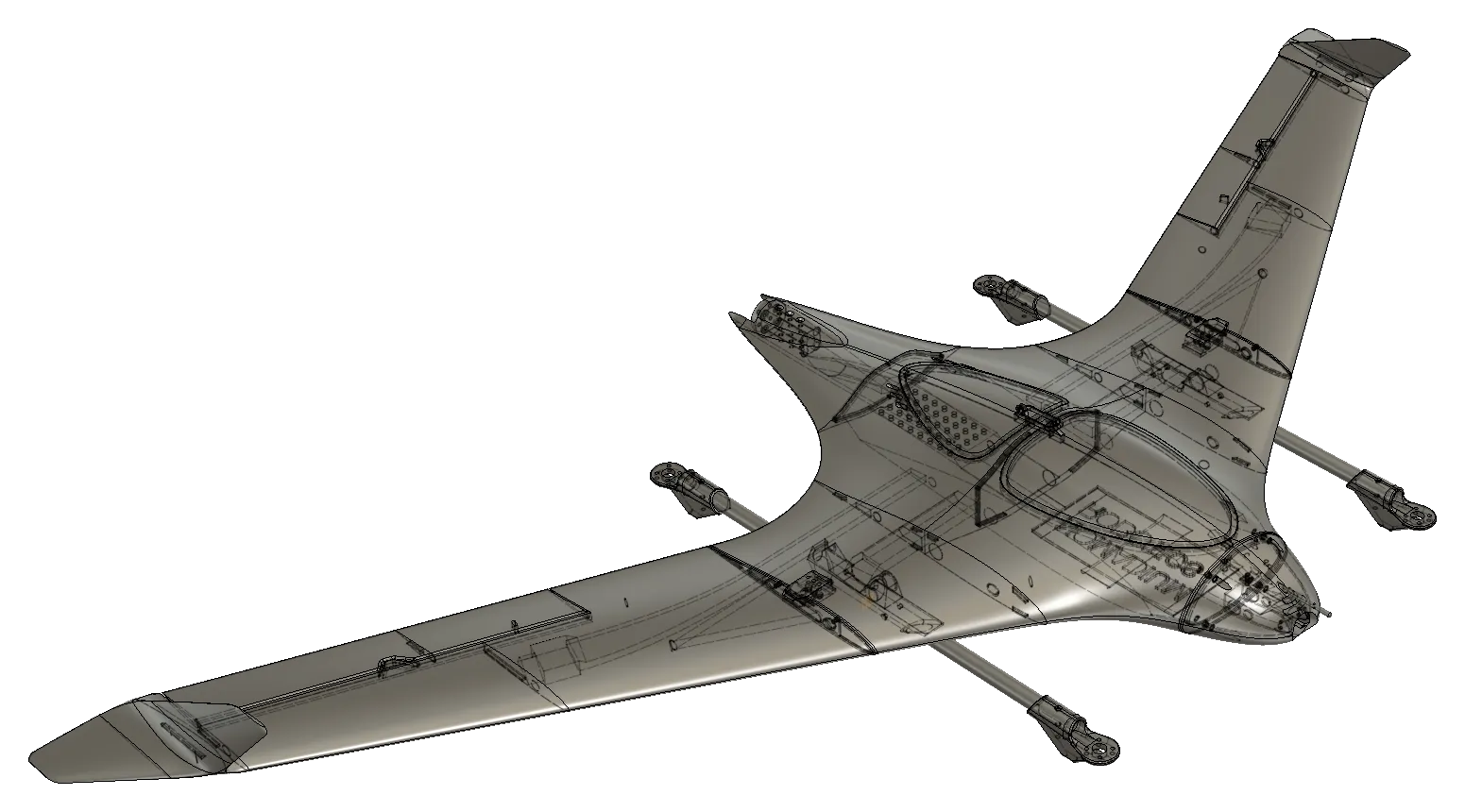
Engineering view of the TerraHawk FPV airframe from above and to one side, showing the internal structure through the skin, the four lift motor booms and the swept tail
02

Your build deserves better than a javelin throw

Smooth vertical take-off and landing, from day one.

Every wing builder knows the moment: weeks of printing and wiring, then one throw decides everything. TerraHawk FPV takes off and lands on its motors, straight up, straight down. No throwing arm, no runway, no bellyflop landings on rough ground.

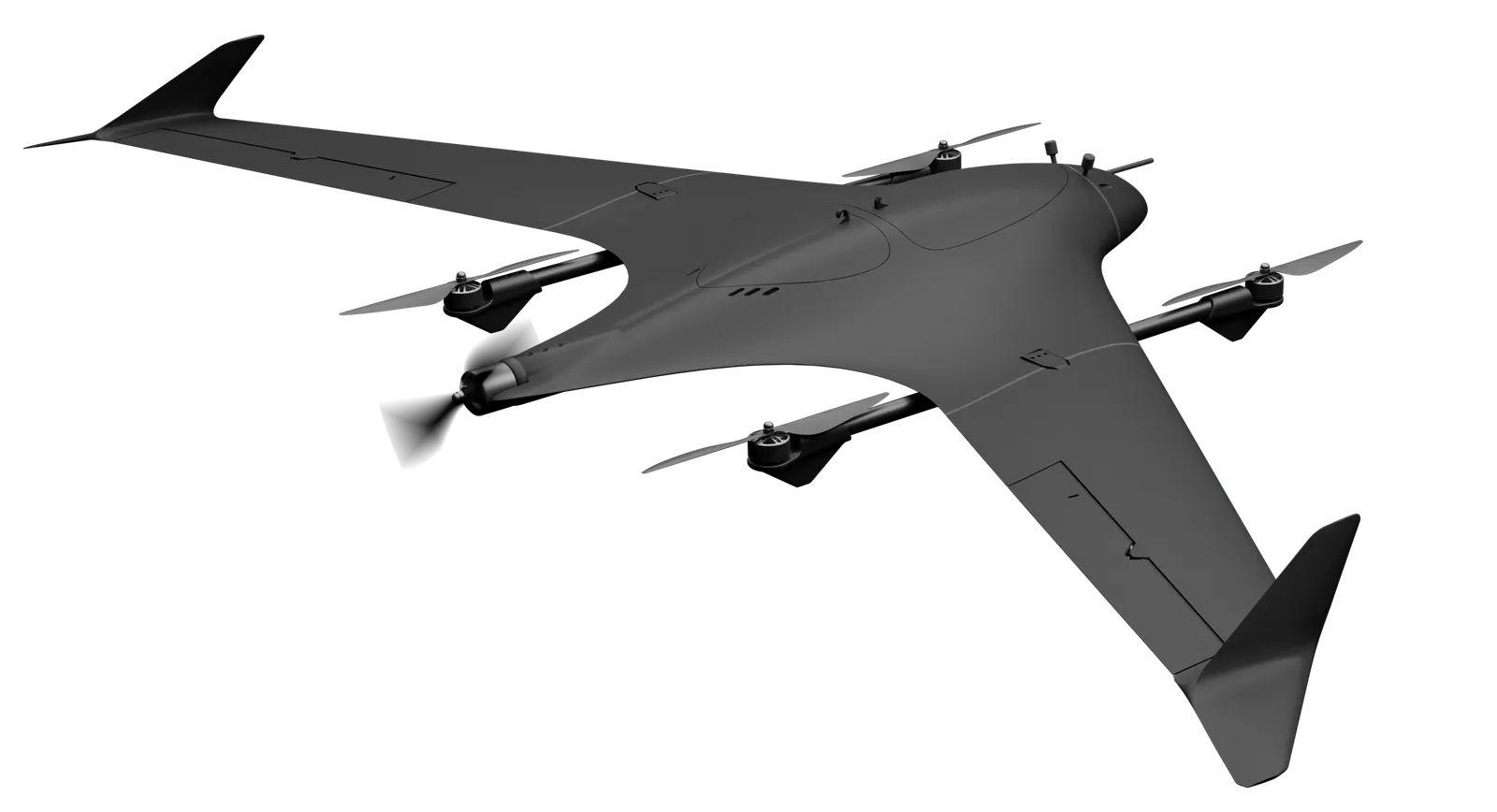
TerraHawk is a 4+1 VTOL: four lift motors plus one pusher. A pusher-only variant is in the kit too, for builders who prefer classic fixed-wing flying.

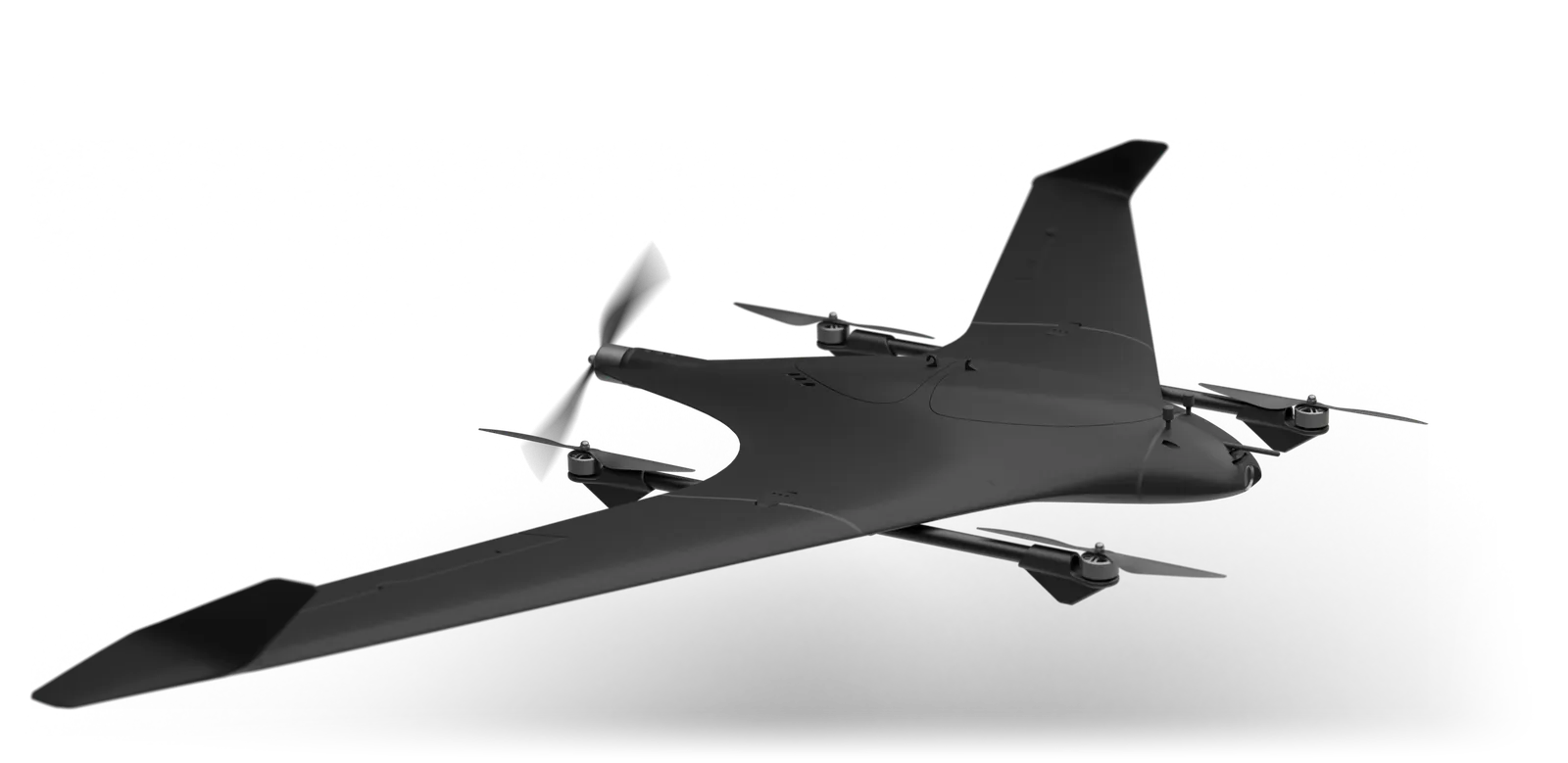
TerraHawk FPV seen from above and ahead, showing the blended-wing body, the four lift rotors on their booms and the swept tail
03

Take to the skies on a proven platform

The planform we fly commercially, scaled to your printer.

The fuselage isn't a tube with wings bolted on. The whole body generates lift, which is why blended-wing aircraft cruise further on the same energy.

It isn't a shape we sketched for a hobby kit either. TerraHawk FPV inherits the aerodynamics and engineering from the airframes we fly commercially for mapping and inspection.

You're buying the experience of an entire team, packed into an FPV kit.

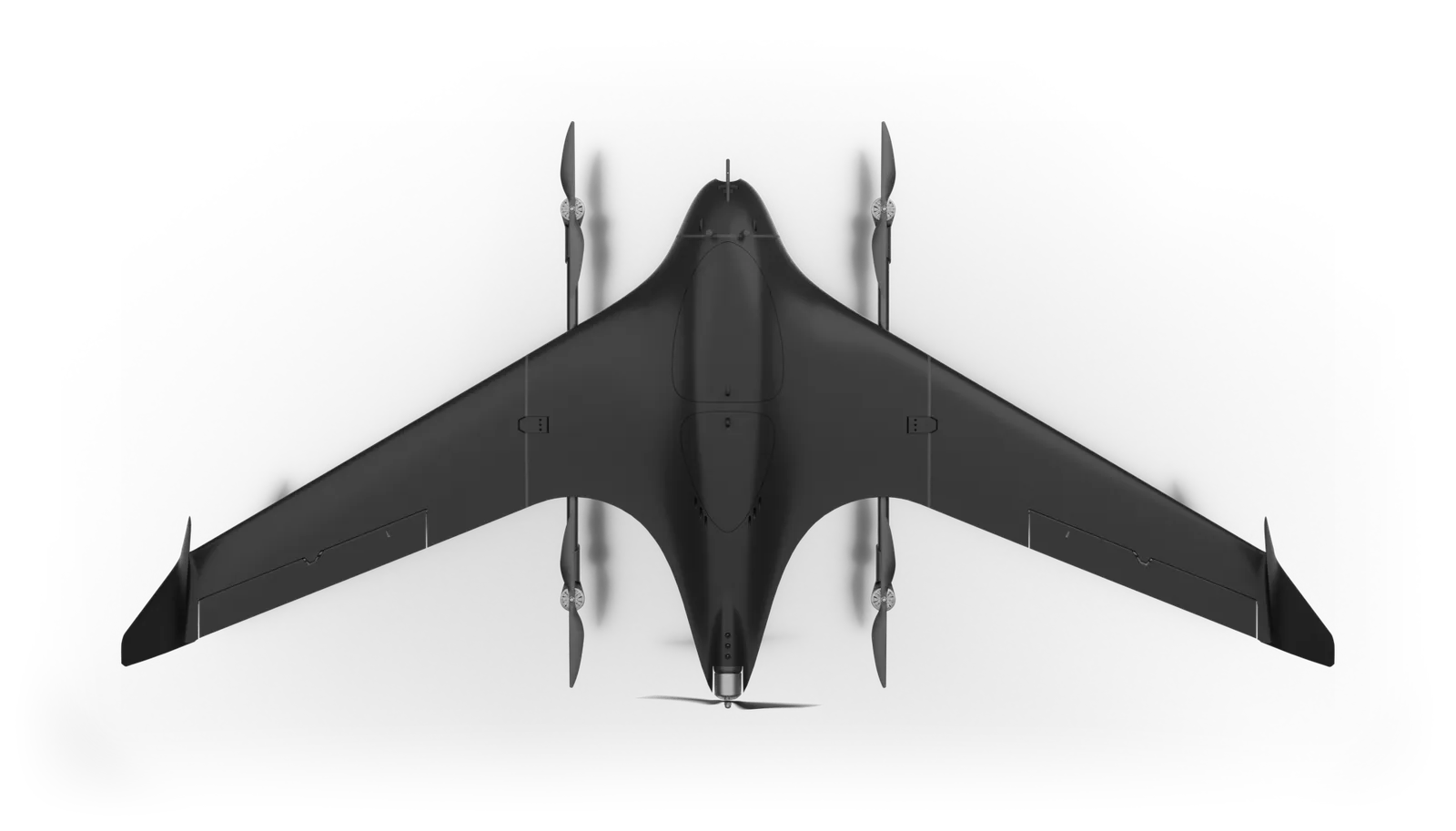
TerraHawk FPV blended-wing airframe seen from directly above, showing the planform, the four lift rotors and the low-aspect-ratio wing
04

A whole aircraft, off your desk at home

Designed for roughly 90% of desktop FDM printers.

The largest parts need 311 mm across the bed and 210 mm of height. That is the diagonal and not the side: a 220 × 220 bed measures 311 mm corner to corner, which is exactly why the slim airfoil sections lay across it at an angle. Anything with more room than that works, so even an Ender 3 handles the biggest pieces. Only 180 mm-class minis (Bambu A1 mini, Prusa Mini) are out.

Confirmed printer families

  • Creality Ender 3 (Pro / V2 / V3)
  • Anycubic Kobra 2
  • Prusa MK4, and MK3S+ at exactly its 210 mm height limit
  • Bambu Lab X1 / P1 / A1
TerraHawk FPV from a low front three-quarter with the pusher propeller turning, showing how slim the blended-wing body is from the side
05

Aerodynamic precision baked into the parts themselves

A manual tells you what to do. The airframe makes it hard to do wrong.

Printing the parts is the easy half. Printed wings go wrong at the glue-up, and this airframe is shaped to stop that happening. Alignment rails run through the mating faces, so the halves find their own position and the seams close square instead of stepped.

There are fewer parts to get wrong in the first place. Threaded inserts are optional too, so fit them if you like them, or build the entire aircraft without a soldering iron anywhere near it.

Alignment rails make gluing literally "seamless"

TerraHawk FPV from above and behind, showing the upper surface, the panel detail and the split elevons on the trailing edge
06

The details you only notice once you're flying

Small decisions, made by people who have built this more than once.

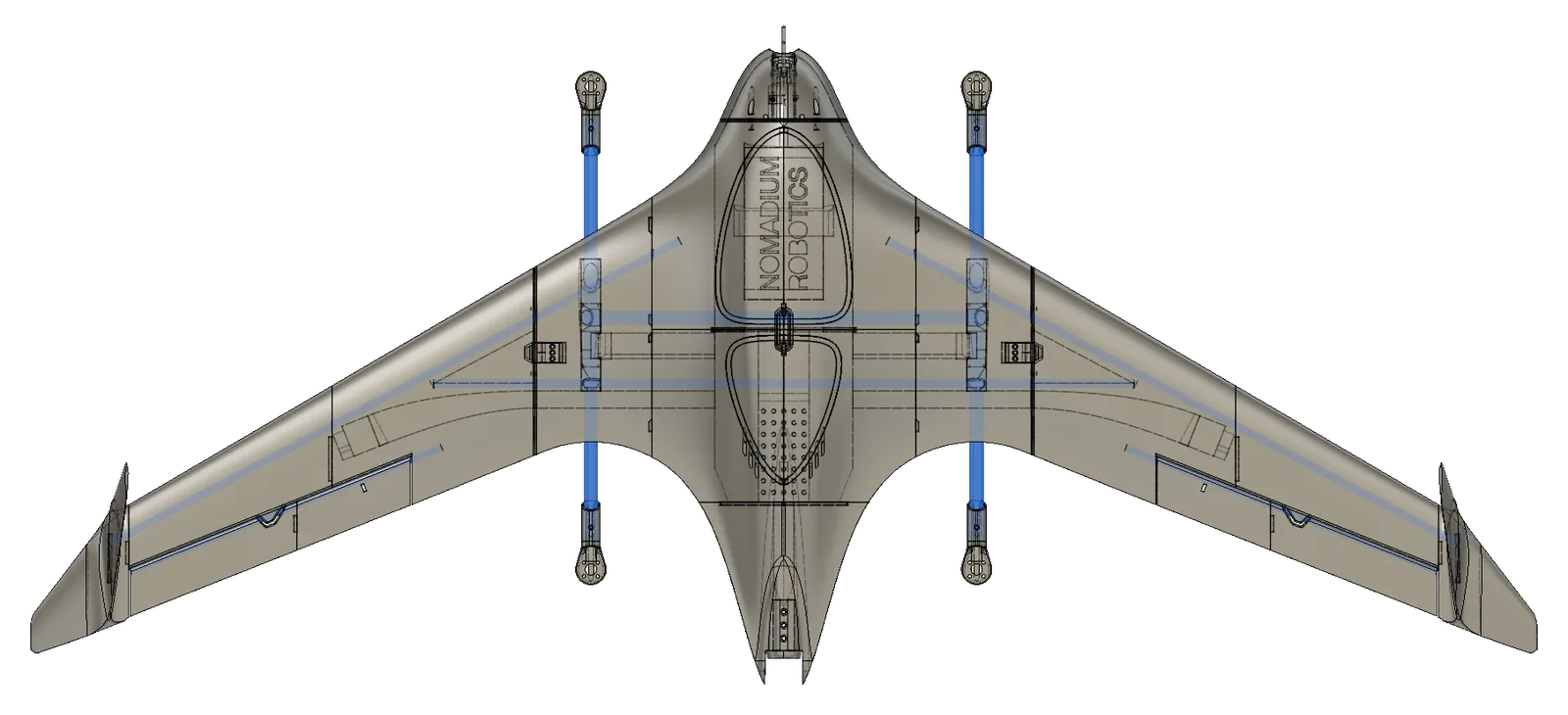
A printed airframe is only as good as what holds it straight. A carbon spar system carries the wing, so it stays stiff through fast turns instead of flexing and washing out the control you asked for. A stiff airframe is easier to tune, too, because it does the same thing twice.

The rest is the accumulation of small decisions you would only think to make after building a few of these.

Details that earn their place

  • Quick-release clips: wings off for the car, back on at the field
  • STEP nose cone, so you can run a custom FPV setup or a gimballed camera
  • Fuselage takes a 6S2P pack, or 4S3P for endurance builds
  • The pusher prop keeps its clearance with the VTOL props fitted
Orthographic top view of the TerraHawk FPV airframe, showing the carbon spar system in blue running the full span through the wing, the four lift motors on their booms and the pusher at the tail
07

One-Time Purchase. Permanent Collection in Your Hangar.

Your own space for everything Nomadium. Aircraft, software tools, flight logs, leaderboards, and more coming soon.

Most printable aircraft are a ZIP file and good luck. This one lands in your hangar, your own space for every Nomadium kit you own, along with whatever we add next.

TerraHawk FPV Digital Kit — Personal Use

$35 + tax

  • Personal-use licence
  • Full STL pack
  • Assembly manual
  • Recommended parts list
  • Recommended print settings
  • Starter ArduPilot param file
  • "Builder" role in Discord, with access to exclusive channels
  • Early access to Augury, our flight log intelligence tool (soon)
  • Monthly leaderboards and rewards for speed and endurance, in Augury (soon)

The final amount is confirmed at checkout. Product delivered digitally. Carbon spars, tools and electrical components not included.
Early Access

TerraHawk FPV is an early access product, undergoing continuous development.

Personal-Use Only

Fly it, film it, share your footage. No commercial work, no manufacturing for others, no resale of parts or files. Commercial licenses are available below.

No Sharing

STL files are uniquely imprinted against unlawful distribution of our intellectual property, including protections under the EU Design Regulation. Please respect our work.

Referrals

We provide generous referral benefits for friends you want to get onboard. Better yet, a purchase lets you compete in leaderboards and share the same exclusive Discord club.

08

You won't be building this alone

Progress, print settings, tuning, and the fix for whatever you are about to hit. All in Discord.

Most first fixed-wing builds don't stall in the air. They stall at 11pm, with a warped part on the desk and nobody to ask.

That's what the Discord is for. Builders posting progress, the print settings that worked, the tuning that didn't, and the fix for whatever you're about to hit next. Your builder role comes with the kit.

Then when it's flying, Augury reads your logs and ranks you on the monthly leaderboard. Endurance and speed, every month, with rewards at the top of each.

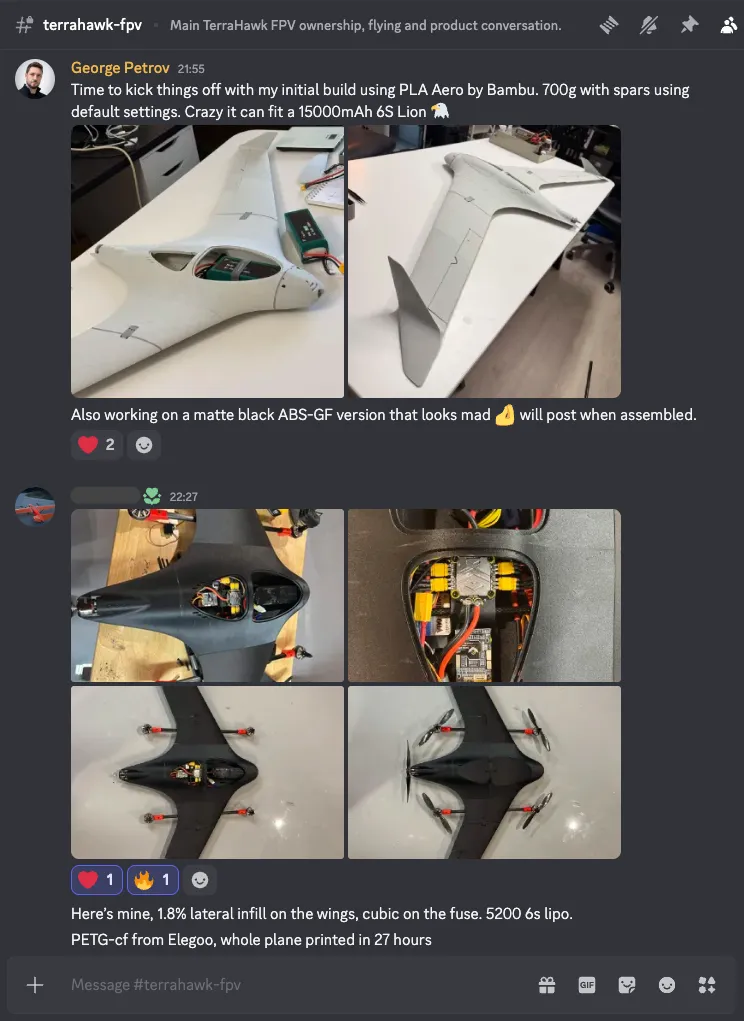
The #terrahawk-fpv Discord channel. Two builders post photos of their printed TerraHawk FPV airframes, one in white PLA Aero with the battery bay open, one in black PETG-CF with the motors fitted, along with their print settings.
09

Building something bigger?

Three ways to go commercial.

Commercial-Use Licence

$300 + tax

Paid flight work

  • Fly a TerraHawk FPV you printed yourself on commercial jobs
  • Fuselage parts in STEP, for sensor and antenna integration
  • Hands-on support from our team

Exclusive Manufacturing Licence

By enquiry

Build and sell

  • Manufacture and sell TerraHawk FPV airframes
  • Nation-wide exclusive manufacturing rights

TerraHawk 600 Developer Kit

Starting from €6'000 vat excl.

Available in Europe

  • Ready-to-fly unmanned aerial system
  • Commercial use, available for order
10

Frequently asked

Do I need ArduPilot experience?

Everyone started from nothing, and all of us learned to fly. Either way, the included configuration file gives you a solid head start.

VTOL or pusher, which should I build?

VTOL if it's your first fixed wing or you fly from rough fields. Pusher if you want maximum simplicity and endurance, and you know how to hand launch.

What flight controller and motors do I need?

The parts list names specific, tested components. No "any 30A ESC will do" hand-waving.

What FPV gear does it support?

The airframe carries DJI O3 and O4, Caddx and similar FPV systems.

Can I sell prints or do paid work with it?

Not with the personal-use licence. Commercial licences and products are available, and the routes are one section above this.

Can I share the STL files with anyone else?

No. Sharing or redistributing the files is reserved to us under Article 19(2)(d) of the EU Design Regulation (Regulation (EU) 2024/2822), which covers copying and distributing any file that records a protected design. Every STL is also uniquely imprinted, so redistribution can be traced back. Please respect our work.

Go and print yourself an aircraft

Full STL pack, assembly manual, parts list, print settings and a starter ArduPilot config. Personal-use licence, delivered to your hangar.

$35 + tax · Personal use licence

Nomadium Robotics

Deploy TerraHawks on real missions

The commercial side builds and operates the certified airframes. Survey, inspection and monitoring work, flown by people, not printed at home.

Visit the commercial site